A Quick Guide to Cost Coding in Construction Finance
A Quick Guide to Cost Coding in Construction Finance

When people talk about cost codes, it can sound technical or purely accounting-driven. Cost codes are just labels or tags that answer a simple question: which part of the job does this dollar belong to?
When those labels are wrong or missing, every report you rely on can be erroneous. WIP becomes harder to trust and it is challenging to understand your margin on different projects. Project conversations can turn into debates about whose numbers are right instead of what needs attention.
When people talk about cost codes, it can sound technical or purely accounting-driven. Cost codes are just labels or tags that answer a simple question: which part of the job does this dollar belong to?
When those labels are wrong or missing, every report you rely on can be erroneous. WIP becomes harder to trust and it is challenging to understand your margin on different projects. Project conversations can turn into debates about whose numbers are right instead of what needs attention.
The definition of cost codes
Cost codes are structured names for pieces of work on a job.
Each code represents a specific scope or activity, such as concrete slab, rough carpentry, interior paint, temporary power, or cleanup. During the estimation process, you assign budget dollars to those buckets. During execution, labor, materials, equipment, and subcontract costs should hit the same buckets, using the same codes.
The goal is continuity. Estimation, field operations, and accounting all describe the job using the same language and the same structure. It helps you compare what you planned to spend against what you are actually spending without building complex spreadsheets to reconcile different views.
Cost codes create consistency that everyone, from the field superintendent to the CFO, can follow.
The definition of cost codes
Cost codes are structured names for pieces of work on a job.
Each code represents a specific scope or activity, such as concrete slab, rough carpentry, interior paint, temporary power, or cleanup. During the estimation process, you assign budget dollars to those buckets. During execution, labor, materials, equipment, and subcontract costs should hit the same buckets, using the same codes.
The goal is continuity. Estimation, field operations, and accounting all describe the job using the same language and the same structure. It helps you compare what you planned to spend against what you are actually spending without building complex spreadsheets to reconcile different views.
Cost codes create consistency that everyone, from the field superintendent to the CFO, can follow.
Why cost codes drive WIP and margins
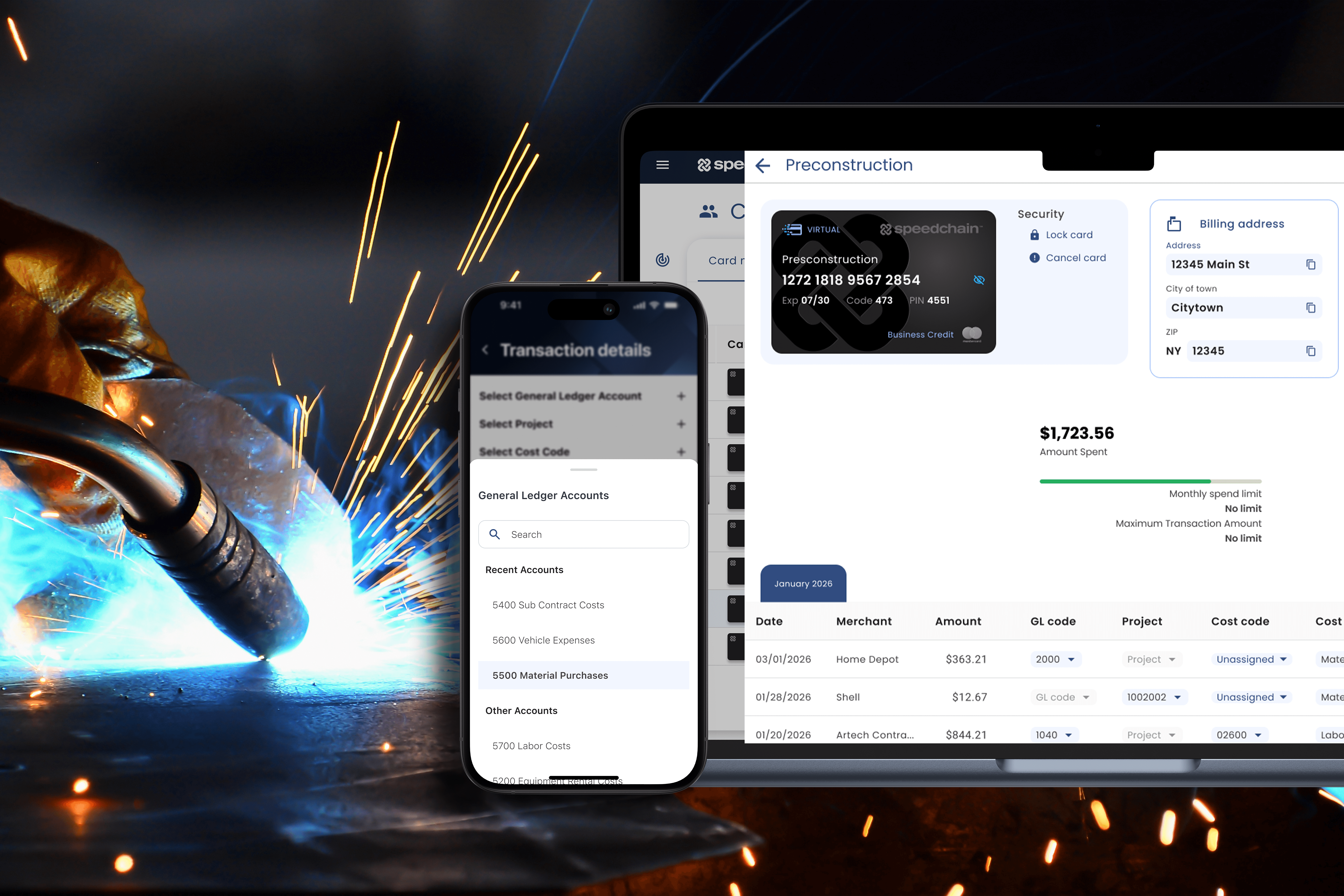
Your WIP and margin reports are only as solid as the cost coding underneath them.
Patterns become visible when timecards, invoices, and card transactions are coded correctly. You can see which scopes are running hot, which ones are under budget, and where productivity is shifting week over week. Project managers can explain variances with confidence because they can tie overruns to specific parts of the work. Controllers and CFOs can compare performance across jobs and use that history to sharpen future bids.
When coding breaks down, the opposite happens. Overruns get buried in generic buckets like "miscellaneous" or "general conditions." Underspending looks like missing work rather than genuine savings. Historical data becomes noisy and unreliable because no one is confident that similar work is coded the same way from job to job.
From a margin standpoint, this is where small issues compound over time. One miscoded expense may not matter. But dozens of them, spread across scopes and months, are the difference between catching a trend early versus explaining margin erosion after the quarter closes.
How weak cost coding shows up day to day
Weak cost coding tends to surface in predictable, practical ways.
You see "other," "uncoded," or "unknown" lines in WIP that are never fully clear. Project managers push back on reports because concrete, equipment, and labor costs are all lumped together, making it hard to see what actually overran. Month-end closes stretch longer as accounting re-codes transactions out of generic buckets and into specific scopes. Estimators hesitate to rely on past jobs because two projects that look similar on paper have very different coding patterns underneath.
The root cause often comes down to unclear guidelines or manual processes. This means the people closest to the spend do not know which code to use, find the list is too long or too technical, or feel the coding step slows them down and therefore skip it hoping accounting will fix it down the line.
Why cost codes drive WIP and margins
Your WIP and margin reports are only as solid as the cost coding underneath them.
Patterns become visible when timecards, invoices, and card transactions are coded correctly. You can see which scopes are running hot, which ones are under budget, and where productivity is shifting week over week. Project managers can explain variances with confidence because they can tie overruns to specific parts of the work. Controllers and CFOs can compare performance across jobs and use that history to sharpen future bids.
When coding breaks down, the opposite happens. Overruns get buried in generic buckets like "miscellaneous" or "general conditions." Underspending looks like missing work rather than genuine savings. Historical data becomes noisy and unreliable because no one is confident that similar work is coded the same way from job to job.
From a margin standpoint, this is where small issues compound over time. One miscoded expense may not matter. But dozens of them, spread across scopes and months, are the difference between catching a trend early versus explaining margin erosion after the quarter closes.
How weak cost coding shows up day to day
Weak cost coding tends to surface in predictable, practical ways.
You see "other," "uncoded," or "unknown" lines in WIP that are never fully clear. Project managers push back on reports because concrete, equipment, and labor costs are all lumped together, making it hard to see what actually overran. Month-end closes stretch longer as accounting re-codes transactions out of generic buckets and into specific scopes. Estimators hesitate to rely on past jobs because two projects that look similar on paper have very different coding patterns underneath.
The root cause often comes down to unclear guidelines or manual processes. This means the people closest to the spend do not know which code to use, find the list is too long or too technical, or feel the coding step slows them down and therefore skip it hoping accounting will fix it down the line.

Streamlining cost coding for your company
You need a cost code structure that your team can use the same way across every job.
In practice, this means building a code list that reflects how your projects are managed. An industry template might be a good starting point, but often it will require adjustments to align your specific business.
Next, limit which cost codes your field teams see so choices are clear and relevant for their role. Set sensible defaults in your systems so common scopes surface first, and rarely used codes are tucke away. Finally, define a review step where accounting or project managers clean up the last 10 to 20 percent of entries before costs post into the GL.
When you streamline your cost codes, estimating, operations, and finance can all look at the same job structure and see the same story without translation.
The payoff of streamlined cost codes
Getting job costs right leads to cleaner WIP, clearer margins, and reduced manual workload at month-end close. It also builds confidence that the numbers you use to run the business are a reflection of what is happening on site.
Streamlining cost coding for your company
You need a cost code structure that your team can use the same way across every job.
In practice, this means building a code list that reflects how your projects are managed. An industry template might be a good starting point, but often it will require adjustments to align your specific business.
Next, limit which cost codes your field teams see so choices are clear and relevant for their role. Set sensible defaults in your systems so common scopes surface first, and rarely used codes are tucke away. Finally, define a review step where accounting or project managers clean up the last 10 to 20 percent of entries before costs post into the GL.
When you streamline your cost codes, estimating, operations, and finance can all look at the same job structure and see the same story without translation.
The payoff of streamlined cost codes
Getting job costs right leads to cleaner WIP, clearer margins, and reduced manual workload at month-end close. It also builds confidence that the numbers you use to run the business are a reflection of what is happening on site.
